


Turn on, plug in, drop out: The rise of the plug-in battery
August 10, 2026

Previous Article
Next Article
More renewables on the grid means more price volatility. At times we have more electricity than we need, pushing prices negative. And at other times, we have too little, pushing prices up.
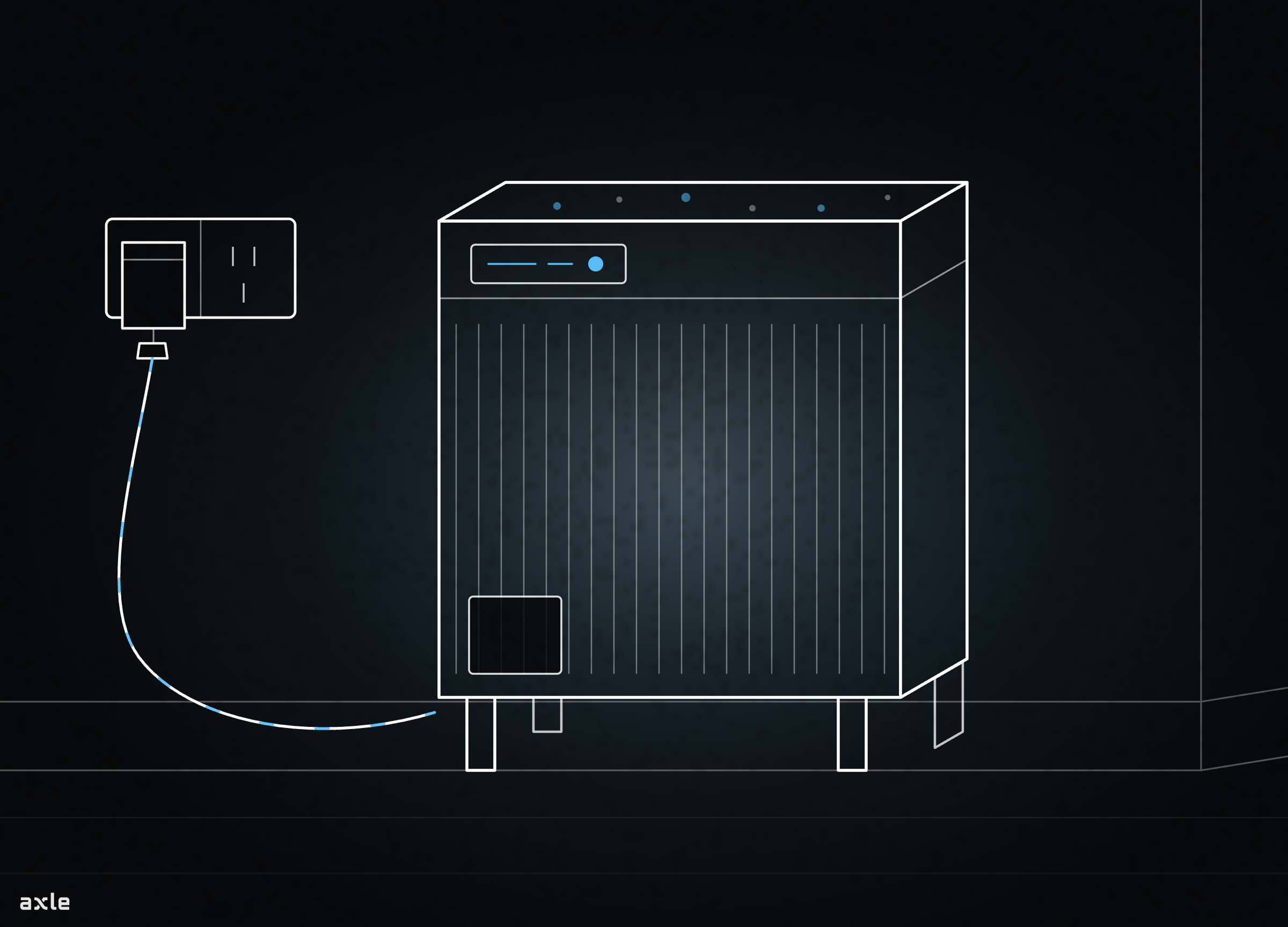
Batteries let us capture that spread, by charging low and discharging high. There are now millions of homeowners across Europe doing just that, with boiler-sized batteries fitted into garages and basements charging up on cheap solar and exporting when prices are high. These take a qualified electrician a few hours to install.
Renters and flat-owners, on the other hand, have historically been left out: they don’t have the space to spend thousands on a home battery that they will leave behind if they move.
The plug-in revolution has started with solar; across much of Europe, you can pick up a cheap plug-in solar panel from the likes of Lidl, plug it in, pop it on the balcony, and away you go. The next wave is plug-in batteries: a quarter of the size of a traditional battery, these fun-sized money machines can be picked up on your next beer run and plugged in without an electrician.
Plug-in battery owners will be able to earn in two ways:
- Bill savings. Charged overnight on cheap off-peak tariffs, plug-in batteries can then discharge cheap electricity to the home throughout the day.
- Supporting the grid. Exporting energy at times of peak demand, via schemes such as the Axle Virtual Power Plant.
The right setup should earn ~£200 in total value per year, giving a 3-5 year payback for a 1kW/2.5kWh system retailing at £600-£1,000.
These are very small assets from the perspective of the grid; they draw less power than a kettle. But if the economics are attractive enough, there’s the potential for this to become very meaningful to the grid in aggregate.
Germany already has millions of plug-in PV systems, and is the only major country to have approved standalone plug-in batteries for retail. The UK will soon allow plug-in solar, with the expectation that plug-in batteries will follow soon. A million plug-in batteries would contribute about 1 GW, equal to the power consumed in Greater Manchester.
Solar panels are already cheap as chips, and battery packs are following the same trend . The cost of traditional systems is increasingly in the labour, the installation, the wiring, the grid permissions, the inventory: everything outside of the hardware.
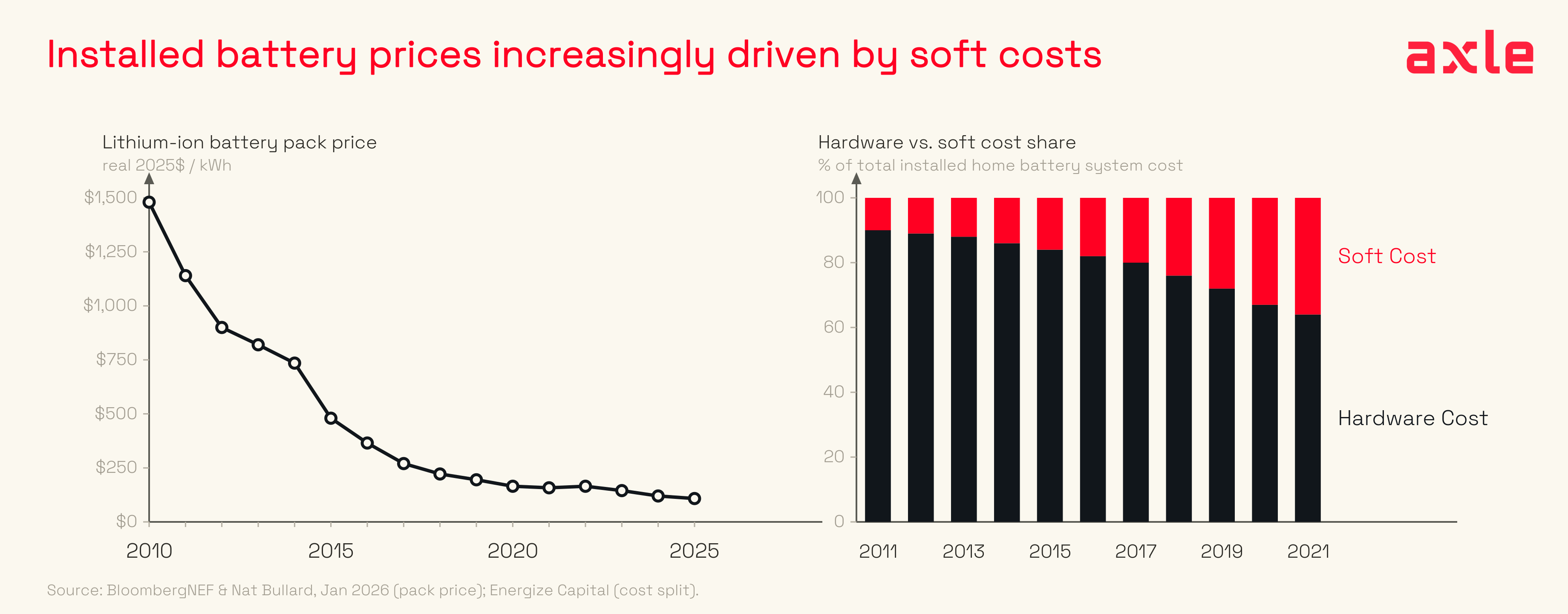
The plug-in revolution holds the promise of unlocking economies of scale: more scale lowers costs, which drives more sales, which lowers costs further. This in turn contributes to lower energy costs, and carbon, for everyone.
In a few year’s time, the cheapest form of grid flexibility may be in your flat: skip the connection queues slowing grid-scale batteries, avoid the soft-costs of a full home battery, and no need to fire up power plants reliant on pricey gas.
Power to the people.
craig-woollaston

karl-bach

alex-pan

christopher-link

ohad-portnoy


Get started
Let's discuss how you can build a world-class flex proposition with Axle
